Climbing formwork is a planned vertical construction method for repetitive concrete elements such as lift cores, shear walls, shafts and pylons. It can support a controlled workflow at height, but it is not automatically the lowest-cost answer. Its value depends on how much repetition, height and programme pressure the project can convert into productive use.
How a climbing system works
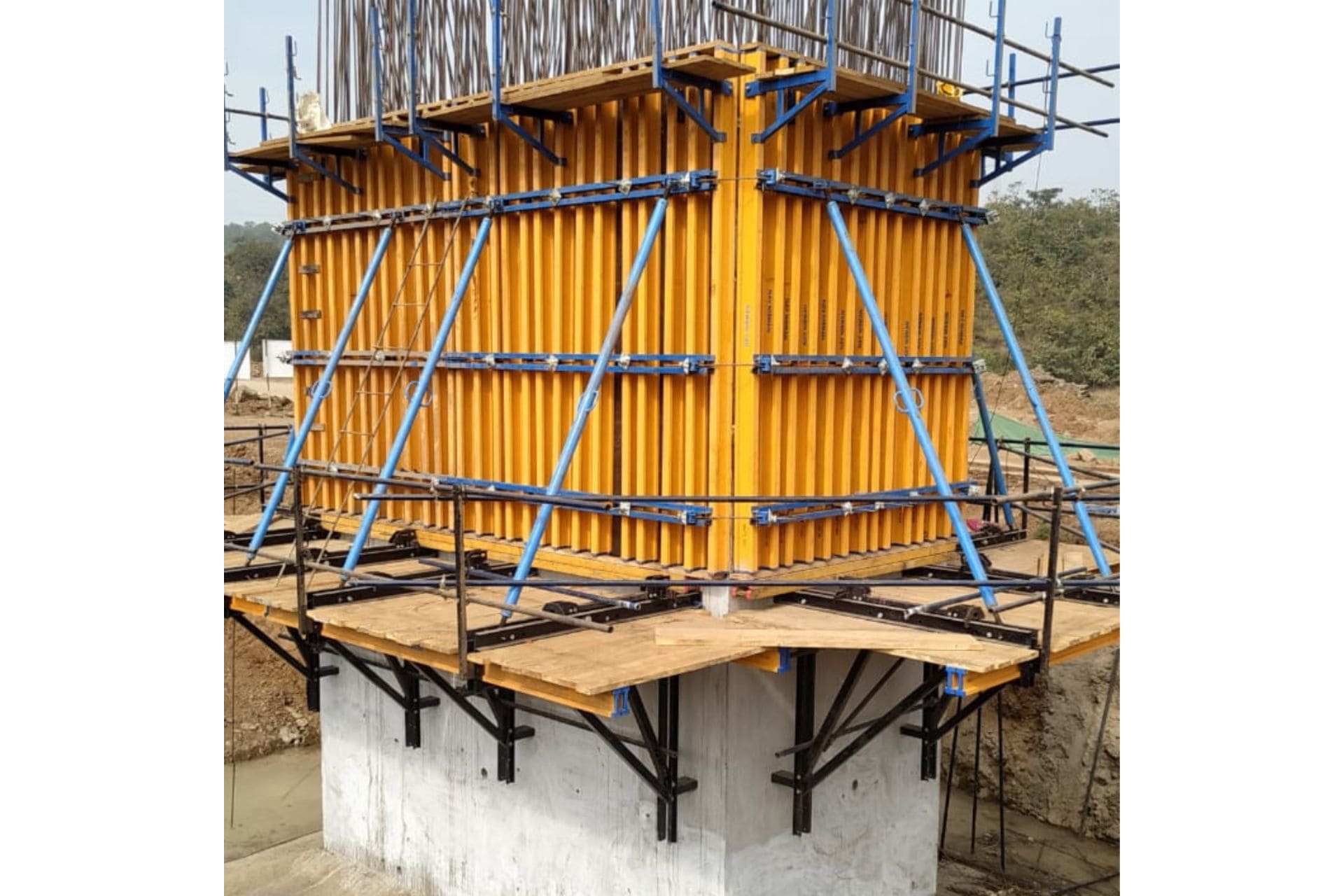
Instead of rebuilding independent formwork and access at each lift, a climbing arrangement moves a coordinated unit upward between pours. The system is designed around formwork, anchoring, working platforms, access and lifting sequence. Nav Nirman’s NC Climbing System uses NEOFLEX formwork with specially designed climbing brackets and working platforms; its three-level unit is lifted by crane to the next level.
Where the economics can work
The strongest case is usually a high, repetitive core or vertical structure with sufficient remaining lifts to benefit from a dedicated arrangement. Consistent geometry, a stable pour sequence and a schedule where vertical progress affects the wider programme can make the up-front engineering, equipment and mobilisation worthwhile. Working platforms and planned access can also reduce repeated temporary-work operations.
Inputs to compare before committing
- Number of repetitive lifts, core geometry and planned pour height.
- Anchor design, wall pressure, platform loading and formwork integration.
- Crane availability, lifting sequence and whether access can be maintained safely.
- Labour skill, inspection regime, erection and dismantling requirements.
- Project duration, procurement timing and the reuse plan after the core is complete.
These factors must be evaluated together. A quicker lift cycle on paper can be undermined by crane congestion, changing core geometry or insufficient planning of reinforcement and embeds.
Safety and productivity are connected
At height, safe access and a well-defined working platform are productivity tools as well as safety controls. The NC system’s published three-level working platform arrangement is intended to provide an organised work area, and the page describes its anchoring and safety-lock arrangements. Site-specific design, inspections and approved operating procedures remain essential.
When a conventional solution may be better
For a short vertical run, irregular walls, frequently changing details or work where crane and platform planning cannot be reliably coordinated, a conventional or simpler jump-form arrangement may be more suitable. Jump formwork is also used for repeated vertical concrete pours and should be evaluated against the project’s lifting method and platform requirements.
Review the core before choosing the system
Nav Nirman can review drawings, lift sequence, access and equipment requirements to help determine whether a climbing formwork system is appropriate for your high-rise or infrastructure project.
PLAN A CLIMBING FORMWORK REVIEW