Aluminium and steel formwork are both durable, reusable choices—but they solve different site problems. The right decision is based on repetition, concrete pressure, handling constraints, finish expectations and the full project sequence, rather than the purchase price alone.
Initial cost and long-term value
Material choice affects the initial investment, but that number should be assessed alongside expected reuse, repair needs, storage discipline and the cost of labour and equipment over the programme. Highly repetitive work gives a system more opportunity to recover its investment. Lower repetition or frequently changing layouts may favour a more adaptable arrangement.
Weight, handling and installation speed
Aluminium panels are typically chosen where lighter manual handling and repeatable assembly are valuable. Steel can be appropriate where robust panels, larger configurations or higher-load applications are needed. On either system, installation and dismantling speed depend on component count, panel layout, access, crew experience and the lifting plan—not on material alone.
Durability, maintenance and concrete finish
Both materials need careful cleaning, release-agent control, safe stacking and regular inspection of panels, ties, clamps and working surfaces. Concrete finish is influenced by panel condition, joint treatment, alignment, concrete placement and vibration. A well-maintained system and a disciplined pour sequence are more important than a broad claim that one material always produces a better finish.
Where aluminium can make more sense
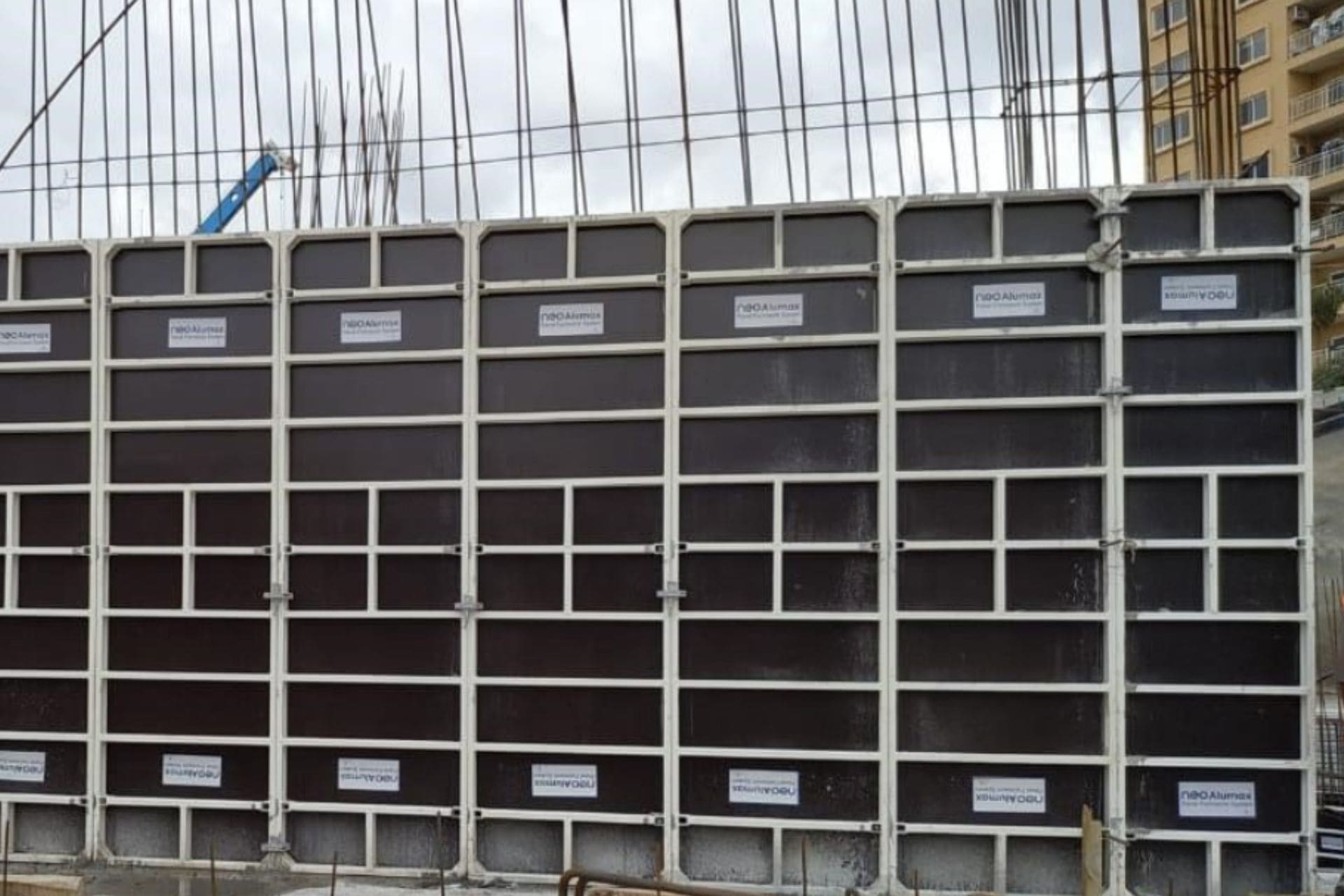
Aluminium is often worth reviewing for repetitive walls, columns, retaining walls and selected housing or vertical layouts where handling weight and productive cycles matter. Neo Alumax uses ready-to-use aluminium panels fixed with birch film-faced plywood, clamps, tie rods, super plates and alignment props. The published product information identifies it for columns, retaining walls and core walls, subject to layout and pressure review.
Where steel may be more appropriate
Steel panel systems can be a strong fit for vertical work where a robust modular arrangement, pressure capacity and project-specific configuration are priorities. Neo Panel System uses lightweight structural-grade steel panels, clamps, ties, super plates and props; it is designed for columns, retaining walls and core walls. The final choice must still be engineered for the pour height, wall geometry and concrete pressure.
Make the comparison project-specific
Bring the repetition schedule, typical drawings, access plan and finish standard into the discussion. Nav Nirman can help compare Neo Alumax, Neo Panel and other wall systems for your scope.
REQUEST A SYSTEM REVIEW